
What is a systemic view of climate change?
Recognizing that climate change impacts are connected
In the first issue of this short series, our Chief Scientific Advisor, Laura Zamboni, shared her vision for what she called “an irresistible sustainable future”. She discussed the evidence on climate change, drawing from specific events and the rigorous scientific tools she masters. In this issue, Laura broadens the perspective to approach climate change in a systemic way.
- Quick Links
- Why is climate change a threat amplifier?
- How does climate change affect the nexus between the economy, food, and health?
- Net zero, safe and just
What humans need to thrive
We all thrive when we have solid health, safety, affordable housing, and a just society. However, today’s reality includes a long list of threats and the resulting poor quality and quantity of life, as a review of reputable industry reports and the UN Sustainable Development Goals reveals.
Siloed challenges
To address the challenges, institutions monitor air pollutants and public health, for instance, and more broadly, the economy. Some NGOs focus on human rights, violent conflicts, or protecting natural species.
Sustainability teams work on labour conditions, mitigating emissions, reducing resource use, and biodiversity loss. Their companies often have complex logistical operations and supply chains vulnerable to extreme events and social unrest.
Lending institutions are beginning to factor in climate change (as noted in a Bloomberg article) and to comply with a complex set of ESG regulations that have come into effect worldwide.
Farmers and agrifood companies may struggle to control pests and soil erosion in their fields, while health professionals are confronted with diseases that were historically confined to different geographies.
Collectively, these complexities, threats, and injustices can be overwhelming until we remind ourselves that they share a common amplifier: climate change.
Why is climate change a threat amplifier?
Each extreme event — whether it is too little or too much water, or too much heat or wind — results in multiple adverse outcomes. Climate change typically amplifies preexisting conditions and vulnerabilities, toppling social or natural systems into a state of emergency or crisis.
Here, I explained the connection between climate change and extreme events.
In my professional and informal engagements alike, I have been surprised by how inconsequential the (in)stability of rainfall, temperature, and wind is often perceived (in Western countries). Most professionals running companies certainly give water from the tap, nutritious food on the table, the solidity of their assets, and the energy they need for granted; and so do my friends and family. I myself, too, but less solidly so. Here is why.
Consequences of rainfall, temperature and winds’ altered by climate change
One manifestation of our changing climate is extreme rainfall. These torrential downpours erode fertile soil and decrease plants’ resilience. This affects the agrifood sector and our access to affordable, varied, and nutritious food.
Infrastructure, such as homes, power lines, transportation networks, and ports, can suffer severe damage; bridges have even collapsed during recent floods (REF). Impeded mobility ranges from the annoyance of a delayed train to severe consequences such as cut off access to jobs, healthcare, and education.
Stagnant waters left behind by floods become breeding grounds for waterborne pathogens and a melting pot of wastewaters and toxic industrial chemicals, leading to public health crises.
Health is also at risk due to altered seasonality, such as milder winters and earlier springs, as well as changed rainfall patterns.

These disrupt ecological balances and often result in infestations and outbreaks, as happened in 2016 with Zika (REF) and in the current rise in Salmonella and E. coli.
Similar mechanisms occur in the olive fruit fly, which complicates management practices (REF) and reduces yield and quality.
The mountain pine beetle is creating widespread patches of dead trees in North American forests (REF). When combined with drought conditions, this situation exacerbates the risk of severe wildfires (REF). These wildfires pose threats to safety and air quality and ultimately increase their very root cause: greenhouse gas emissions.
Many remember the lifeless body of two-year-old Aylan Kurdi, who washed up on a beach wearing a red shirt, after his family fled the Syrian Civil War in 2015. The image is a stark reminder of violated human rights, particularly those of children.
A drought, amplified by climate change, heightened Syria’s existing vulnerabilities, leading to scarcity of basic needs such as food and water, ultimately escalating to a humanitarian crisis.
Fluctuations in commodity prices are often tangible and clearly perceived. But how are they connected to climate change, and by which financial levers?
How does climate change affect the nexus between the economy, food, and health?
According to an analysis by Swiss Re titled “No Action on Climate Change Is Not an Option”, we are heading toward a 10% loss of total economic value by mid-century – Five times greater than the loss of global GDP in 2009. (link)
Hurricane Helene. An example of intertwined impacts
Looking at a concrete case, Hurricane Helene in 2024 caused catastrophic damages amounting to nearly $80 billion in both insured and uninsured losses, and resulted in 252 fatalities across the Southeastern United States (REF). The storm brought flash flooding, landslides, and widespread destruction of infrastructure, communities, and natural habitats.
Millions experienced power outages at home and at production facilities; for example, milk spoiled at livestock farms [REF]. Manure runoff from such facilities spread pathogens and pollutants known to harm people and animals [REF]. The resulting contaminated soil, together with the high winds, flattened crops and orchards, causing $7 billion in damage to six million acres of agricultural land (REF).
The hurricane even washed away Appalachian communities inland, which had once been regarded as havens from climate change.
Scientists confirm that Helene’s winds and rainfall were intensified by climate change.
According to the reinsurance company Munich Re, Hurricane Helene significantly contributed to making 2024 one of the most expensive disaster years since 1980. (REF.)
Climate change triggers chains of disarray
Severe extreme events result in significant losses in value, business interruptions, and systemic market devaluation.
Certain regions are now becoming “uninsurable”. There are rising reports of unaffordable premiums and insurance companies withdrawing from high-risk markets, particularly in places like California and Florida (REF).
Earlier this year, Günther Thallinger, an Allianz board member, highlighted that the issue of uninsurability jeopardizes not only the financial sector but society as a whole. He calls it “climate-driven market failure.” (REF)
In high-risk regions, tighter credit availability and fewer buyers are expected, as lenders typically require property insurance to issue mortgages, he wrote on LinkedIn.
Simultaneously, extreme weather events can also reduce crop yields and livestock productivity, as I discussed in the first blog about the UK, and increase the prevalence of pests and diseases locally.
Current CO2 concentrations and soil degradation have led to a decline in the nutritional value of staple foods, characterized by lower levels of protein, vitamins, and minerals, alongside excessive levels of sugars and starches (REF). This scarcity of essential nutrients can trigger numerous health issues in industrialized countries.
The economic repercussions are severe: farmers face lower profits, food prices rise, and food security diminishes, with detrimental effects on macroeconomic indicators like GDP and household income.
In high-risk areas, the shrinking middle class may decline further, while concerned wealthy residents may relocate. This can lead to a shrinking tax base, forcing municipalities to cut budgets, ultimately reducing local resilience.
Meanwhile, impoverished individuals from less industrialized countries are already migrating.
Time of “meager cows”, my grandmother would have said.
Mr. Thallinger and the Swiss Re report align with the scientific consensus: we must correct our course and act swiftly to achieve net-zero emissions, paving the way for a safe and just society.te-driven market failure.”
In high-risk regions, tighter credit availability and fewer buyers are expected, as lenders typically require property insurance to issue mortgages, he wrote on LinkedIn.
Simultaneously, extreme weather events can also reduce crop yields and livestock productivity, as I discussed in the first blog about the UK, and increase the prevalence of pests and diseases locally.
Current CO2 concentrations and soil degradation have led to a decline in the nutritional value of staple foods, characterized by lower levels of protein, vitamins, and minerals, alongside excessive levels of sugars and starches (REF). This scarcity of essential nutrients can trigger numerous health issues in industrialized countries.
The economic repercussions are severe: farmers face lower profits, food prices rise, and food security diminishes, with detrimental effects on macroeconomic indicators like GDP and household income.
In high-risk areas, the shrinking middle class may decline further, while concerned wealthy residents may relocate. This can lead to a shrinking tax base, forcing municipalities to cut budgets, ultimately reducing local resilience.
Meanwhile, impoverished individuals from less industrialized countries are already migrating.
Time of “meager cows”, my grandmother would have said.
Mr. Thallinger and the Swiss Re report align with the scientific consensus: we must correct our course and act swiftly to achieve net-zero emissions, paving the way for a safe and just society.
Net zero, safe and just
I strive for a functional, self-sustaining, regenerative, and robust economy. I envision a society where people and communities thrive, where food is nutritious and healthy, and where my daughter can walk to school without inhaling car pollutants. I hope for a future where even the invisible, odorless, yet polluting CO2 has returned to safe levels.
At Earthbase, we recognize that we are part of a highly interconnected system, and the challenges posed by climate change are widespread and often overwhelming. By employing the Sustainable Development Goals (SDGs) as a framework—specifically “Zero Hunger” (SDG 2), “Good Health and Wellbeing” (SDG 3), “Life Below Water” (SDG 14), “Life on Land” (SDG 15), “Decent Work and Economic Growth” (SDG 8), “Responsible Consumption and Production” (SDG 12), and “Peace, Justice, and Strong Institutions” (SDG 16)—we can best address these challenges in conjunction with “Climate Action” (SDG 13).
Times of “meager cows” are not easy. Our goal is not to tackle every issue individually, as that would be impractical. However, we are confident we can create a positive impact on several fronts and steer the future toward a healthier state by addressing one root cause underlying many of these challenges – climate change.
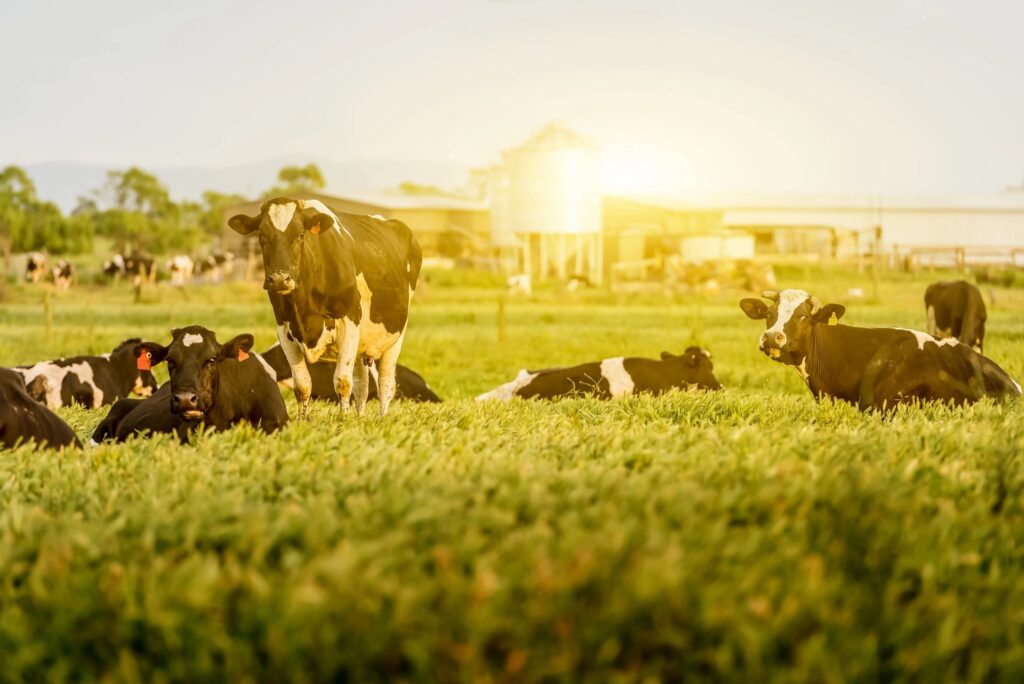
We could say we are focused on “fattening the cows”, meaning making the most of our current resources and innovations, and transforming them into market-ready, desirable, effective, and economically sound solutions.
Or, as one interpretation of the Pharaoh’s famous dream about the “seven fat cows” in Genesis goes, we work to make the years of hardship coexist with the years of plenty.
In the third blog of this short series, we will explore the practicalities of identifying and building innovative, systemic, sustainable solutions that align Earthbase’s goals.
Stay tuned, and stay in the loop — follow Earthbase on LinkedIn.